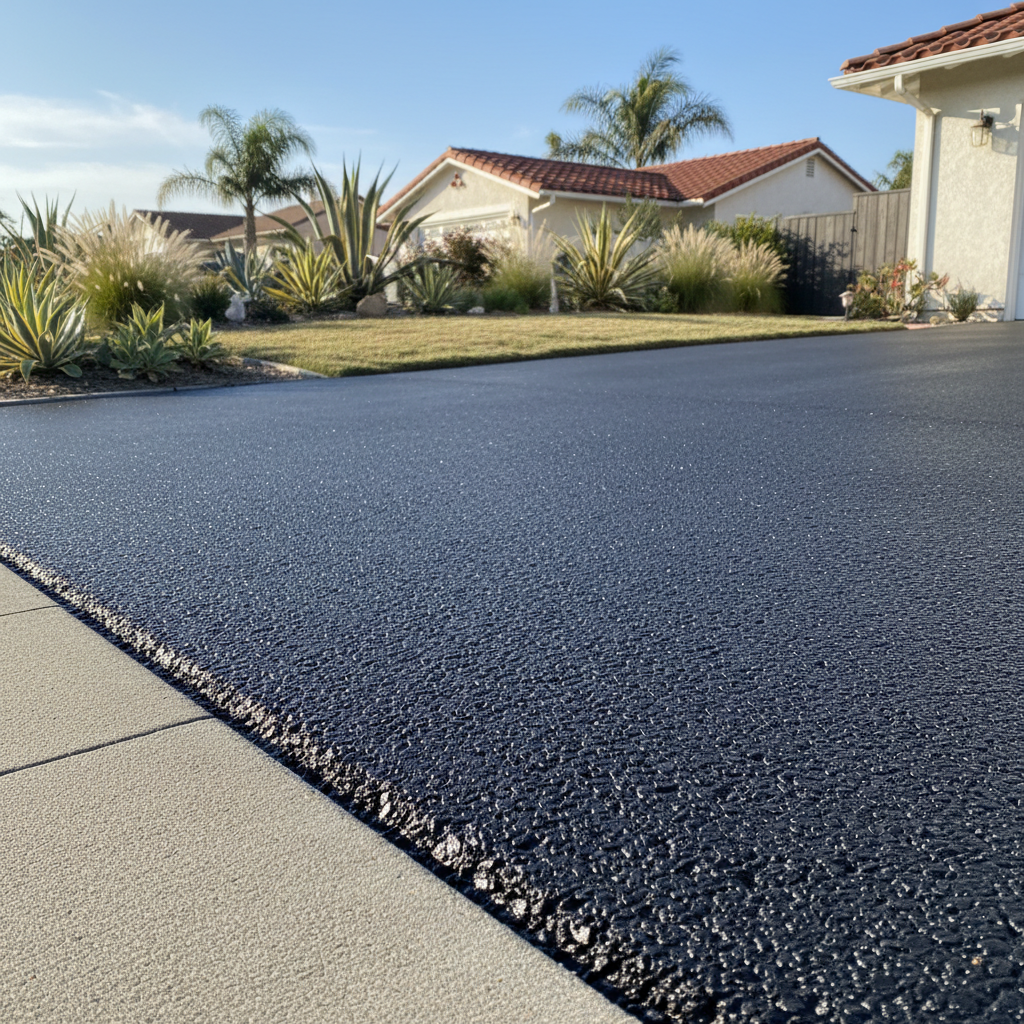
Alright, let's talk asphalt. I've been doing this a long time here in Long Beach, and I hear the same questions from homeowners pretty regularly. People want to know what's up with their driveways, how long things last, and what they should really be doing to keep their asphalt in good shape. So, I figured I'd put together some straight answers to those common questions you've got.
How long does a new asphalt driveway really last in Long Beach?
This is probably the most common question I get, and the answer isn't a simple number. A brand new, properly installed asphalt driveway in Long Beach should give you a good 15 to 20 years, no problem. But that's if it's done right from the start, with a solid base and the right thickness of asphalt. And here's the kicker: it also depends on how you treat it. If you're parking heavy RVs on it constantly, or you've got a tree root system pushing up from underneath, that lifespan's gonna shrink. Regular maintenance, like sealcoating every few years, also plays a huge role in getting you to that 20-year mark. Think of it like your car – you wouldn't expect it to last without oil changes, right? Same deal with your driveway.
What's the deal with sealcoating? Do I really need it, and how often?
Okay, sealcoating. Some folks think it's just for looks, but it's way more than that. You absolutely need it, especially with our Long Beach sun beating down on everything. Asphalt is made with petroleum, and that sun and the occasional rain we get here, even if it's not much, will break down the binders in the asphalt over time. It'll start to look dull, then gray, and then it'll get brittle and crack. Sealcoating puts a protective layer over your asphalt, shielding it from UV rays, water, and even oil spills. It keeps the asphalt flexible and prevents those tiny cracks from turning into big problems.
As for how often? For a typical residential driveway, I usually tell people every two to three years is a good sweet spot. If your driveway sees a lot of traffic, or it's constantly exposed to harsh sun, you might lean towards every two years. If it's mostly shaded, maybe you can stretch it to three. Don't wait until it's already falling apart; sealcoating is preventative maintenance, not a miracle cure for a crumbling driveway.
I've got standing water on my driveway after it rains. Is that a big problem?
Yeah, standing water is definitely a problem, and it's something you shouldn't ignore. It's called 'ponding,' and it usually means your driveway wasn't graded properly when it was installed, or maybe the asphalt has settled over time. Water is asphalt's worst enemy. When it sits there, it seeps into any tiny cracks, and eventually, it'll undermine the base layer. If we get a cold snap, which is rare here but happens, that water can freeze, expand, and then you've got even bigger cracks and potholes. Plus, it just looks bad and can be a slip hazard. If you've got ponding, you'll likely need some re-grading or a localized repair to fix the drainage. It's not something that'll just 'go away,' you know?
Can I just pave over my old concrete driveway with asphalt?
You can, but it's not always the best idea without proper preparation. Paving over concrete is a common request, and it can be done. The concrete needs to be in pretty good shape – no major cracks or heaving. If it's cracked all over, those cracks are going to reflect right through your new asphalt layer eventually. We call that 'reflection cracking.' You'll also need to make sure the existing concrete has good drainage and that adding another layer of asphalt won't create height issues with your garage door or walkways. Sometimes, it's better to remove the old concrete and start fresh with a proper aggregate base. We'd have to take a look at your specific situation to give you the best advice on that.
What's the difference between asphalt and blacktop? Are they the same thing?
Good question, and it causes a lot of confusion. For all intents and purposes, especially when you're talking about driveways and parking lots, they're pretty much the same thing. 'Asphalt' is the technical term for the mixture of aggregate (like sand, gravel, crushed rock) and asphalt cement, which is the black, sticky binder. 'Blacktop' is just a more informal, older term that people use to describe asphalt paving. You might hear some folks differentiate them by saying blacktop has a higher percentage of aggregate, making it a bit more durable for heavy traffic, but honestly, in the residential world, when someone says 'blacktop,' they mean 'asphalt.' Don't get too hung up on the names; focus on the quality of the mix and the installation.
I'm seeing small cracks everywhere. What's 'alligator cracking' and how do I fix it?
Ah, alligator cracking. That's when your asphalt starts to look like, well, an alligator's skin – a network of interconnected cracks. It's not good news, because it usually means the underlying base layer has failed, or the asphalt itself has become very brittle and fatigued. It's a sign of serious structural weakness. If it's just a small, isolated area, sometimes we can cut out that section, repair the base, and patch it. But if it's widespread, especially across a significant portion of your driveway, you're probably looking at needing a full remove and replace. You can't just sealcoat over alligator cracking; that's like putting a band-aid on a broken leg. The problem is deeper than the surface. Blue Diamond Inglewood Asphalt can come out and give you an honest assessment of what's going on and what your options are.